

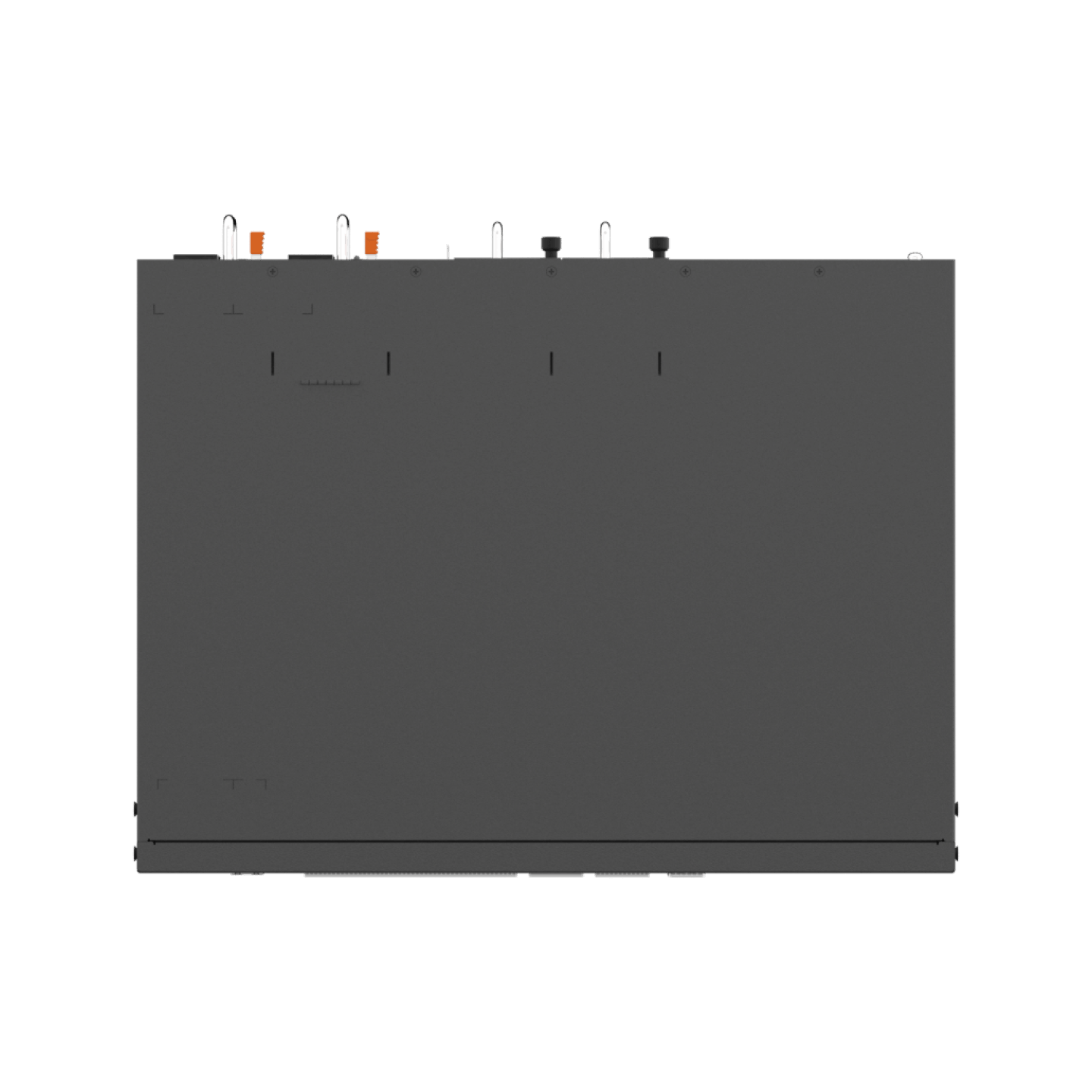
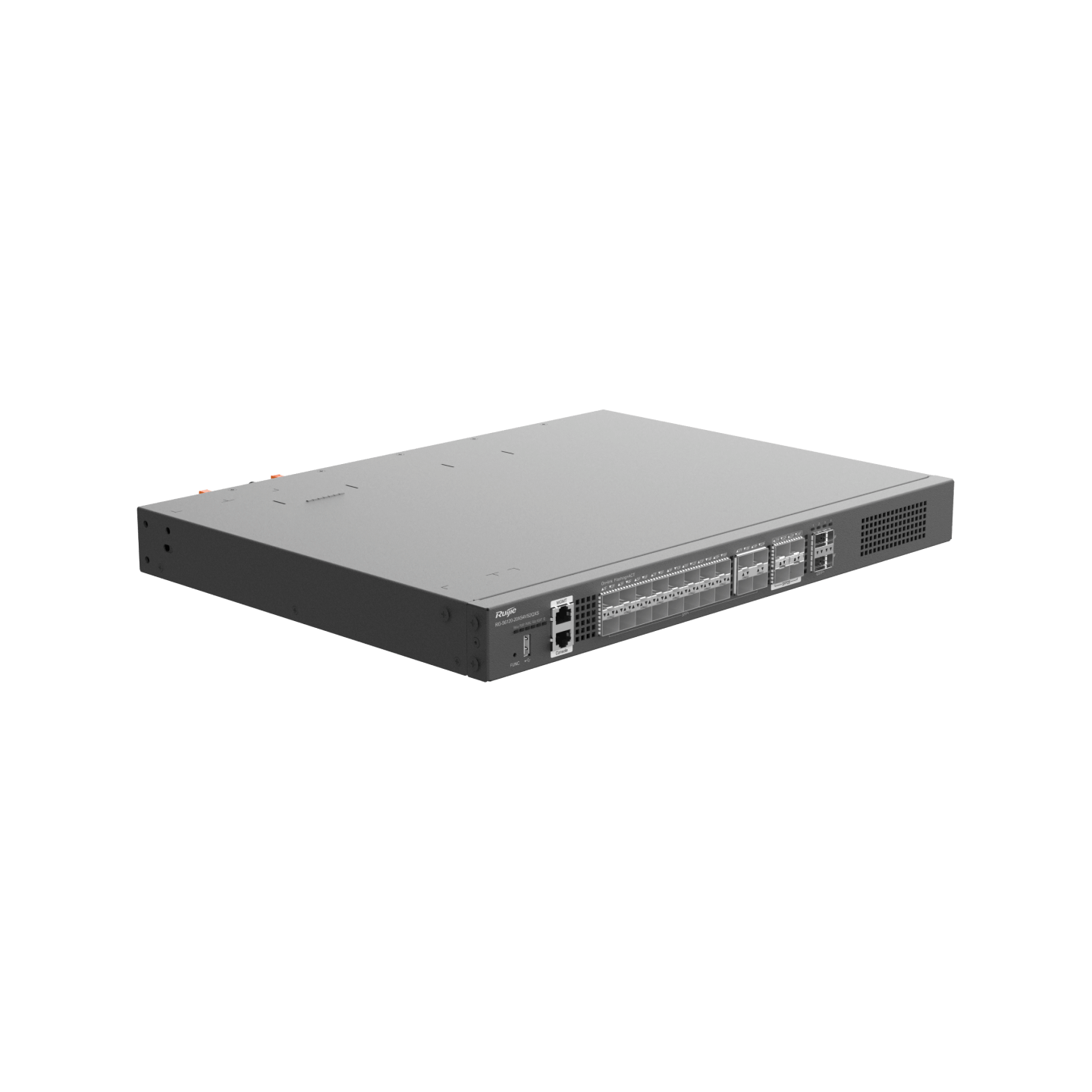
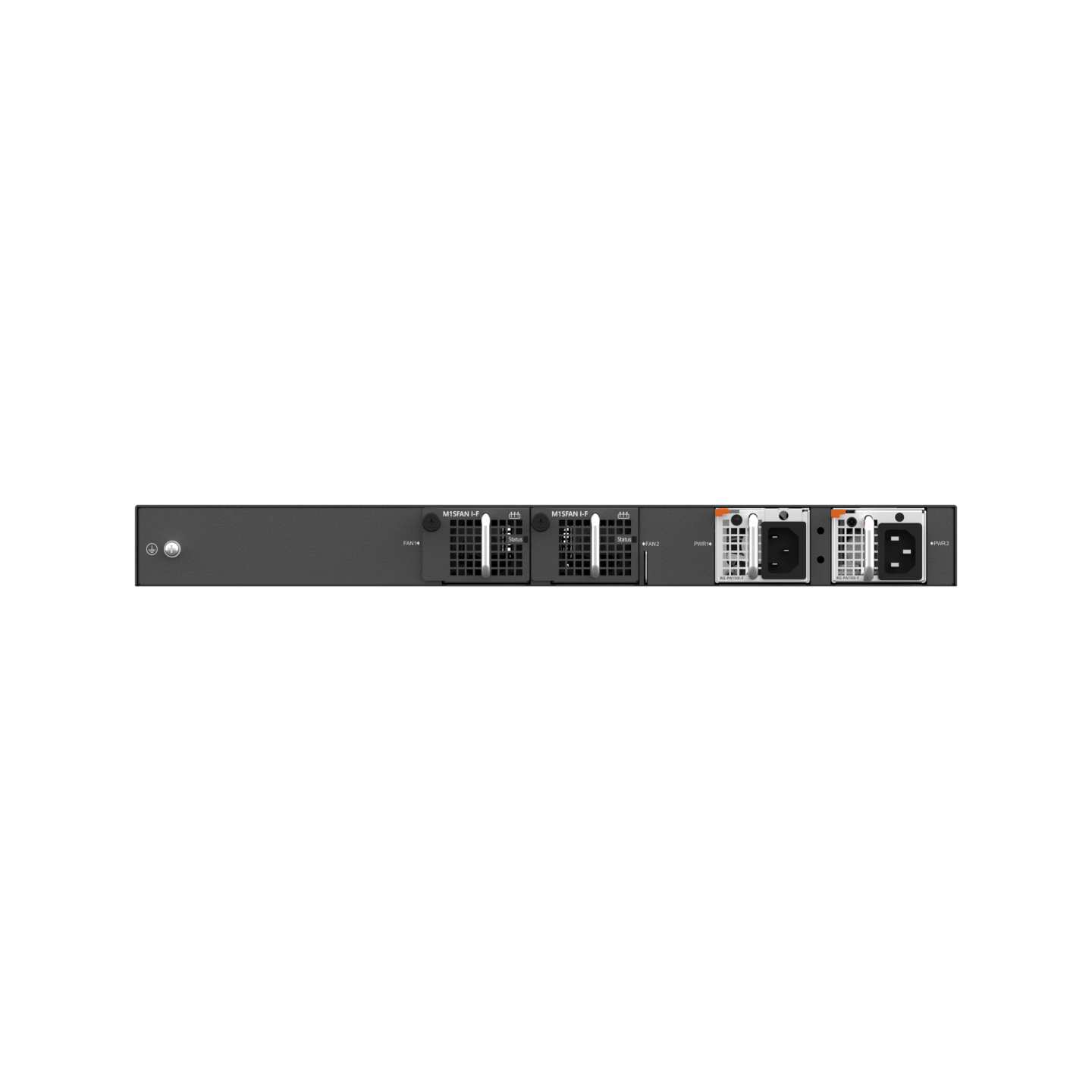
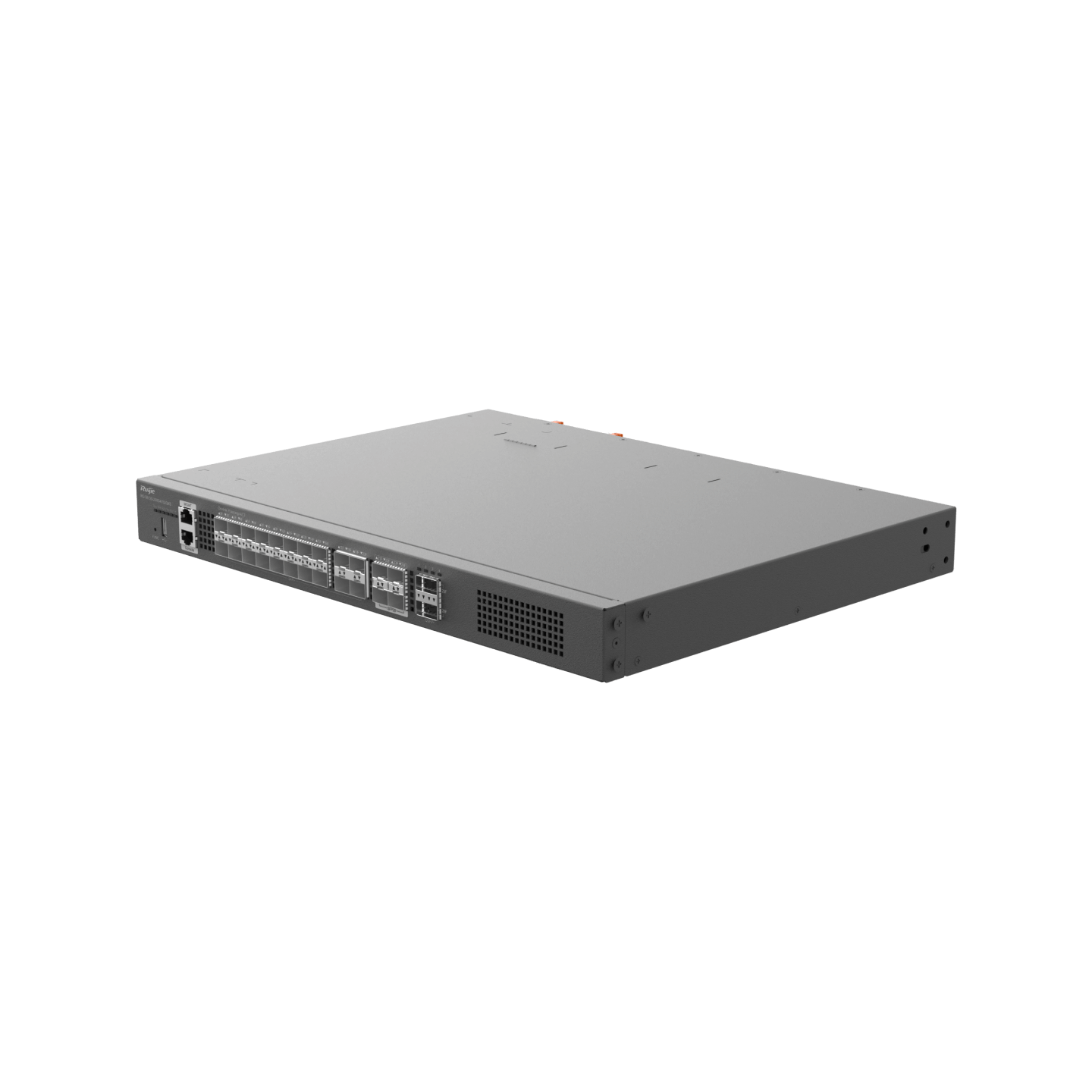
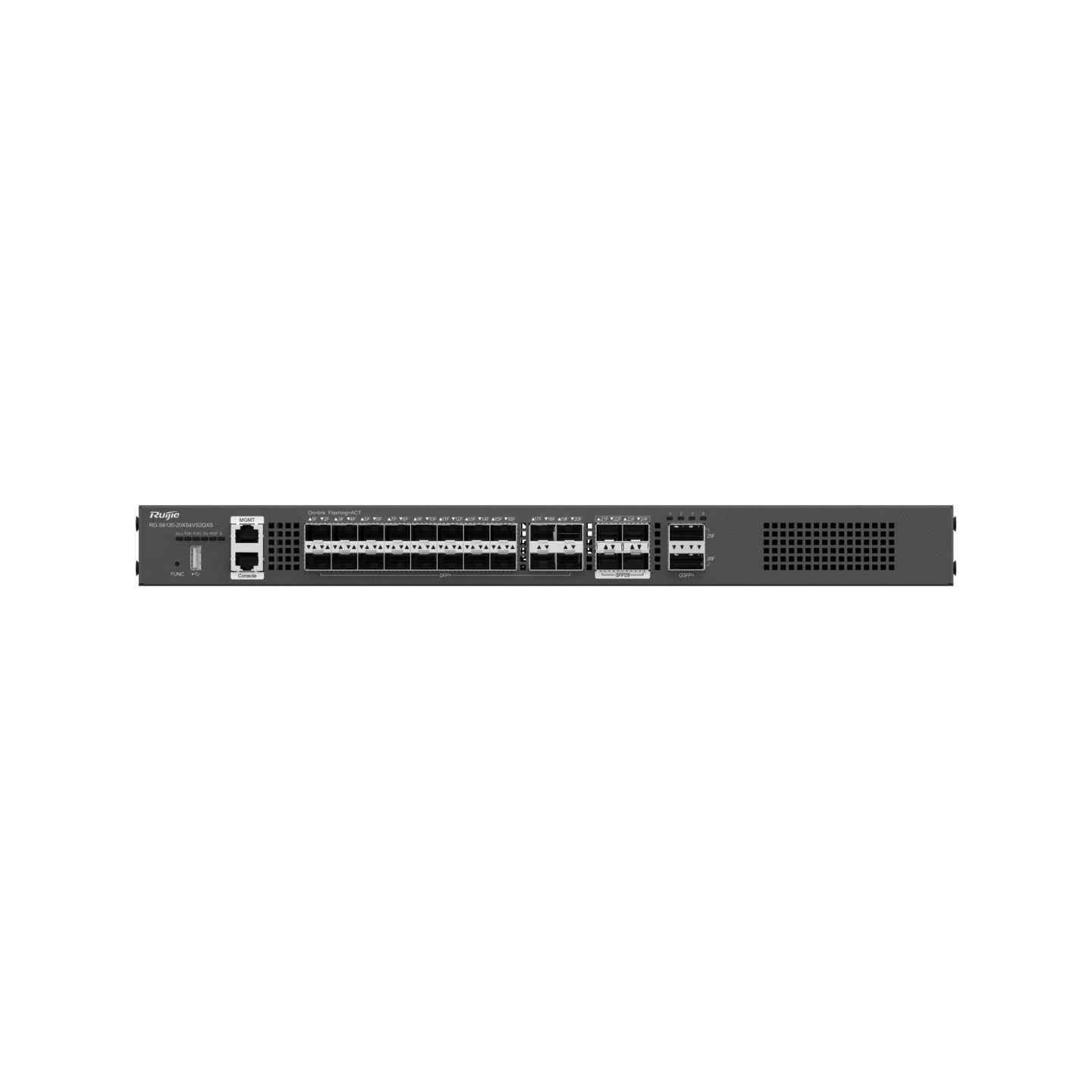
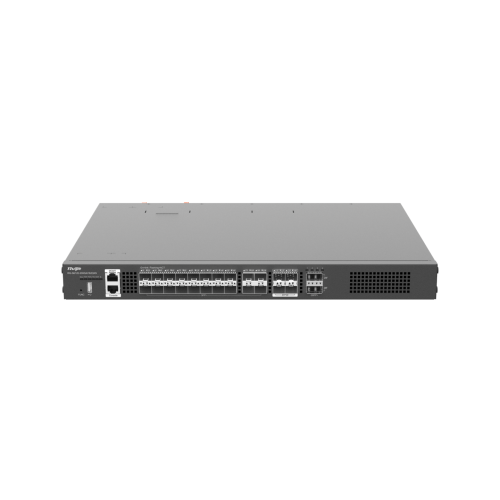
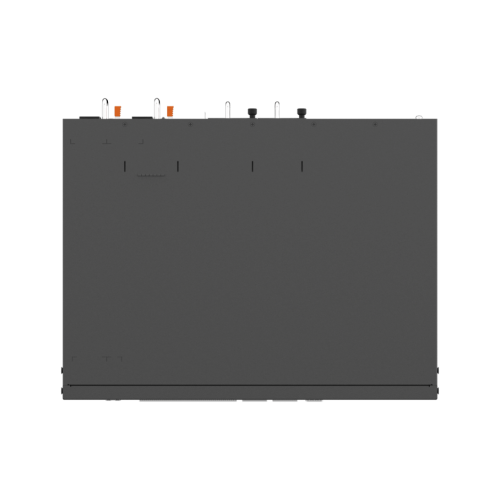
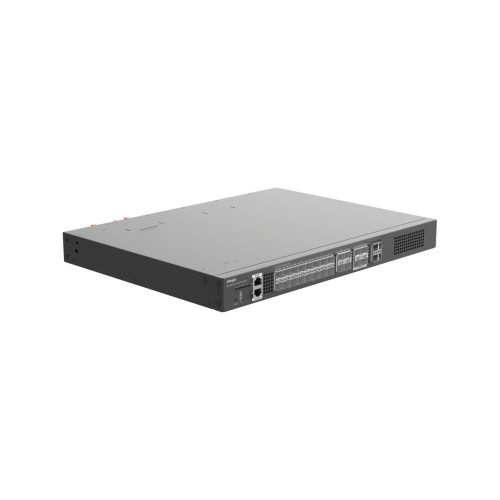
Key Specification
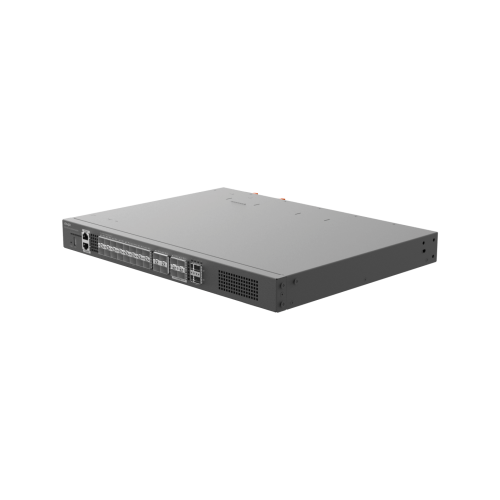
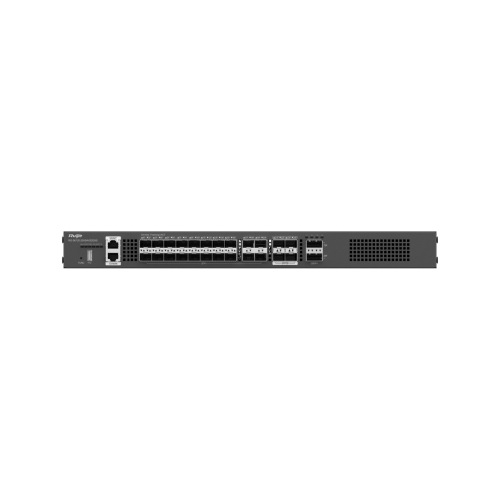
| Fixed service port | 20 x 1GE/2.5GE/10GE SFP+ ports
4 x 10GE/25GE SFP28 ports 2 x 40GE QSFP+ ports |
Fixed management port | 1 x RJ45 console port
1 x RJ45 MGMT port |
| System switching capacity | 912 Gbps | System packet forwarding rate | 678 Mpps |
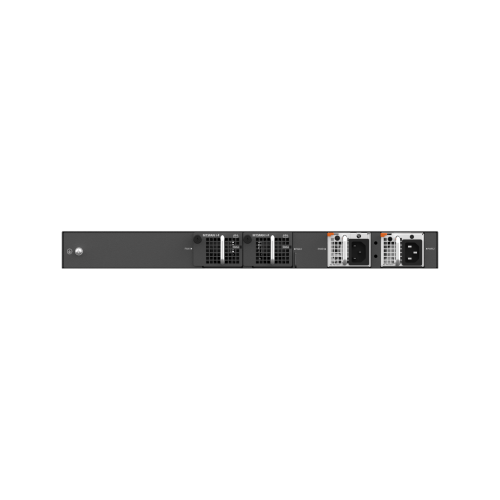
| Module slot | 2 x power module slots
2 x fan module slots |
Unit dimensions (W x D x H) | 440 mm x 330 mm x 43.6 mm (17.3 in. x 12.99 in. x 1.72 in.) |
| Operating temperature | 0°C to 50°C (32°F to 122°F) | Warranty duration | 3 years |
Features
Layer 3 All-Optical 10G Core & Aggregation Switch RG-S6120-20XS4VS2QXS
Recommended aggregation switch for large-sized networks, or core switch for small and medium-sized networks. With 20 x 1GE/2.5GE/10GE SFP+ ports and 4 x 10GE/25GE SFP28 ports, the switch provides flexible access capabilities. The 2 x 40GE QSFP+ uplink ports deliver high-speed uplink connectivity, fully satisfying the requirements of high-performance networks.
VSU Virtualization, Flexible Networking and High Performance
- Millisecond Failover
Connected by an aggregate link, the VSU virtual system and peripherals switch links in milliseconds to ensure service continuity in case of a failure.
- High Scalability
VSU virtualization technology is supported to increase bandwidth through link aggregation, which greatly improves forwarding capabilities of the switch.
- Simplified Networking
Multiple physical switches can be virtualized into one logical unit to simplify network configuration and architecture, eliminating loops, and improving reliability.
Hardware Redundancy, Guaranteed Service Continuity and Network Connectivity
- Hot-Swappable Power Modules + Intelligent Fan Modules
Power modules can be replaced without affecting device operation. Intelligent fan speed regulation is supported for efficient cooling, providing dual protection for the network.
- Hardware-Level Boot Redundancy
Two Flash chips are used to store the system boot program for hardware-level boot redundancy, avoiding device failure caused by a failed Flash chip.
- Optical Port Fault Isolation
The innovative isolated chip design ensures that short-circuit current cannot reach the power supply chip directly. Failure of one optical module will not affect the normal operation of other optical ports, thus effectively ensuring service stability.
Network Security Policies and Real-Time Monitoring, Delivering Enhanced Network Robustness
- CPP
CPP protects the CPU from data attacks to ensure CPU stability under high usage, achieving significant improvement in the device’s security performance.
- NFPP
NFPP protects CPU from high load damage to guarantee device management and operation, thus improving network security and stability.
Ruijie Unified Networking Central (RG-UNC) Visualized Management, Automated and Effortless Operations
- RG-UNC, a unified visual management platform, supports real-time monitoring of key devices and links, fine-grained alarms, centralized configuration backup and recovery, network-wide management, plug-and-play, and rapid deployment, enhancing O&M efficiency.
RG-UNC Unified Networking Central – Simplified Management, Automated and Effortless Operations
- Unified platform management, real-time monitoring of network status, comprehensive insight into the user experience chain, intelligent analysis and diagnosis, and comprehensive protection of the business experience.
- Supports end-to-end operation and maintenance of optical links, and makes optical networks visible, manageable, and controllable.
Specifications
Hardware Specifications
| Port specifications | RG-S6120-20XS4VS2QXS |
| Fixed service port | 20 x 1GE/2.5GE/10GE SFP+ ports
4 x 10GE/25GE SFP28 ports 2 x 40GE QSFP+ ports (1 x 40GE port can be split into 4 x 10GE ports) Note: One switch provides a maximum of 32 x 10GE ports |
| Module slot | 2 x power module slots
2 x fan module slots |
| Power module | RG-PA150IB-F
RG-PD150IB-F |
| Fan module | M1SFAN I-F (pre-installed 2) |
| Fixed management port | 1 x RJ45 console port
1 x RJ45 MGMT port |
| USB | 1 x USB 2.0 port |
| System specifications | RG-S6120-20XS4VS2QXS |
| System packet forwarding rate*1 | 678 Mpps |
| System switching capacity*2 | 912 Gbps |
| CPU | Single-core CPU, with the clock speed of 1.25 GHz |
| Real-time clock (RTC) | Supported |
| BootROM | 16 MB (storing boot software for 1+1 boot redundancy) |
| Flash memory | 1 GB (storing boot software for 1+1 boot redundancy) |
| Memory | 1 GB, 32-bit width, 4-bit ECC |
| Switch buffer | 4 MB |
*1 means the system’s packet forwarding rate.
*2 means the system’s switching capacity.
| Power supply and consumption | RG-S6120-20XS4VS2QXS |
| Power supply | 2 x pluggable power modules |
| Power module redundancy | 1+1 redundancy |
| Power input | RG-PA150IB-F(AC input):
● Rated input voltage: 100 V AC to 240 V AC, 50/60 Hz ● Maximum input voltage: 90 V AC to 264 V AC, 47 Hz to 63 Hz ● Maximum input current: 3 A RG-PD150IB-F (DC input): ● Rated input voltage: –48 V DC to –60 V DC ● Maximum input voltage: –36 V DC to –75 V DC ● Maximum input current: 5 A |
| Maximum output power | RG-PA150IB-F: 150 W
RG-PD150IB-F: 150 W |
| Maximum power consumption | 85 W |
| Dimensions and weight | RG-S6120-20XS4VS2QXS |
| Unit dimensions (W x D x H) | 440 mm x 330 mm x 43.6 mm (17.3 in. x 12.99 in. x 1.72 in.) |
| Rack height | 1 RU |
| Shipping dimensions (W x D x H) | 545 mm x 500 mm x 235 mm (21.46 in. x 19.69 in. x 9.25 in.) |
| Unit weight | 4.6 kg (10.14 lbs, with two fan modules) |
| Shipping weight | 5.70 kg (12.57 lbs) |
| Environment and reliability | RG-S6120-20XS4VS2QXS |
| Temperature | Operating temperature: 0°C to 50°C (32°F to 122°F)
Storage temperature: –40°C to +70°C (–40°F to +158°F) Note: At an altitude between 3,000 m (9,842.52 ft.) and 5,000 m (16,404.20 ft.), every time the altitude increases by 220 m (721.78 ft.), the maximum temperature decreases by 1°C (1.8°F). |
| Humidity | Operating humidity: 10% to 90% RH (non-condensing)
Storage humidity: 5% to 95% RH (non-condensing) |
| Altitude | Storage altitude: –500 m to 5,000 m (–1640.42 ft. to +16,404.20 ft.)
Operating altitude: –500 m to 5,000 m (–1640.42 ft. to +16,404.20 ft.) |
| Mean time between failure (MTBF) | 200,000 hours (about 22 years) |
| Fan | 2 x pluggable fan modules |
| Heat dissipation | Fan cooling, front-to-rear airflow |
| Acoustic noise | Maximum value: < 78 dB |
| Power module hot swapping | Supported |
| USB hot swapping | Supported |
| Cable hot swapping | Supported |
| Power supply monitoring | Monitoring of power supply model and status
Power supply failure alarming |
| Fan monitoring | Automatic speed adjustment
Fan failure alarming |
| Temperature monitoring | Temperature monitoring, over-temperature alarming |
| ESD | ESD contact/air discharge: 6 kV/8 kV
ESD susceptibility contact/air discharge: 8 kV/15 kV |
| Surge protection | MGMT port: 4 kV
Service port: 6 kV RG-PA150IB-F: common mode 6 kV, differential mode 6 kV |
| Certifications and regulatory compliance | RG-S6120-20XS4VS2QXS |
| Safety regulation | IEC 62368-1 |
| EMC regulation | EN 300386, EN 55032 Class A, EN 55035, EN IEC 61000-3-2, EN 61000-3-3, EN 61000-4-2, EN 61000-4-3, EN 61000-4-4, EN 61000-4-5, EN 61000-4-6, EN 61000-4-11 |
| RoHS | European RoHS Directive 2011/65/EU & Amendment(EU) 2015/863 |
Software Specifications
| Feature | RG-S6120-20XS4VS2QXS |
| Ethernet Switching
|
Jumbo frame (maximum length: 9,216 bytes) |
| IEEE 802.1Q (supporting 4K VLANs) | |
| Maximum number of VLANs that can be created: 4,094 | |
| Voice VLAN | |
| Super-VLAN and private VLAN | |
| MAC address-based, port-based, protocol-based, and IP subnet-based VLAN assignment | |
| GVRP | |
| Basic QinQ and selective QinQ | |
| STP (IEEE 802.1.d), RSTP (IEEE 802.1w), and MSTP (IEEE 802.1s) | |
| ERPS (G.8032) | |
| LACP (IEEE 802.3ad) | |
| LLDP/LLDP-MED | |
| Non blocking | |
| IP Service | Static and dynamic ARP |
| DHCP server, DHCP client, DHCP relay, and DHCP snooping | |
| DNS | |
| DHCPv6 Client, DHCPv6 relay, and DHCPv6 snooping | |
| Neighbor Discovery (ND) and ND snooping | |
| IP Routing | Static routing |
| RIP and RIPng | |
| OSPFv2 and OSPFv3 | |
| GR | |
| IS-IS | |
| BGP4 and BGP4+ | |
| BGP4 and MP-BGP | |
| Equal and Weighted Cost Multi-Path (ECMP) | |
| IPv4/IPv6 VRF | |
| IPv4/IPv6 PBR | |
| Multicast | IGMPv1/v2/v3 and IGMP proxy |
| IGMPv1/v2/v3 snooping | |
| IGMP filtering and IGMP fast leave | |
| PIM-DM, PIM-SM, and PIM-SSM | |
| PIM-SSM for IPv4 and IPv6 | |
| MLDv1/v2 | |
| MLDv1/v2 snooping | |
| MSDP | |
| PIM-SMv6 | |
| Multicast source IP address check
Multicast source port check Validity check of IGMP packets |
|
| Multicast querier | |
| ACL and QoS
|
Standard IP ACLs (hardware ACLs based on IP addresses) |
| Extended IP ACLs (hardware ACLs based on IP addresses or TCP/UDP port numbers) | |
| Extended MAC ACLs (hardware ACLs based on source MAC addresses, destination MAC addresses, and optional Ethernet type) | |
| Expert-level ACLs (hardware ACLs based on flexible combinations of the VLAN ID, Ethernet type, MAC address, IP address, TCP/UDP port number, protocol type, and time range) | |
| Time-based ACLs | |
| ACL80 and IPv6 ACL | |
| Applying ACLs globally (hardware ACLs based on flexible combinations of the VLAN ID, Ethernet type, MAC address, IP address, TCP/UDP port number, protocol type, and time range) | |
| ACL redirection | |
| Port traffic identification | |
| Port traffic rate limiting | |
| 802.1p/DSCP/ToS traffic classification | |
| Traffic classification based on 802.1p priorities, DSCP priorities, and IP precedences | |
| Traffic classification based on ToS values | |
| Congestion management: SP, WRR, DRR, WFQ, SP+WRR, SP+DRR, and SP+WFQ | |
| Congestion avoidance: tail drop, RED, and WRED | |
| Eight queues on each port | |
| Rate limiting in each queue | |
| L2/L3/L4 packet identification and classification | |
| Security | AAA |
| RADIUS and TACACS+ | |
| Filtering of invalid MAC addresses
Broadcast storm suppression Hierarchical management of administrators and password protection BPDU guard |
|
| RADIUS authentication and authorization | |
| Port- and MAC address-based 802.1x authentication | |
| IEEE802.1X authentication, MAC address bypass (MAB) authentication, and interface-based and MAC address-based 802.1X authentication | |
| Web authentication | |
| Hypertext Transfer Protocol Secure (HTTPS) | |
| SSHv1 and SSHv2 | |
| ICMPv6 | |
| IPv6 addressing and Path MTU Discovery | |
| Port security | |
| IP source guard | |
| SAVI | |
| ARP spoofing prevention | |
| CPP and NFPP | |
| Various attack defense functions including NFPP, ARP anti-spoofing, DHCP/DHCPv6 attack defense, ICMP attack defense, ND attack defense, IP scanning attack defense, and customizing attack defense packet types | |
| Loose and strict RPF
uRPF ignoring default routes |
|
| Reliability | REUP |
| Rapid Link Detection Protocol (RLDP), Layer 2 link connectivity detection, unidirectional link detection, and VLAN-based loop control | |
| Data Link Detection Protocol (DLDP) | |
| IPv4 VRRP v2/v3 and IPv6 VRRP | |
| BFD | |
| GR for RIP, OSPF, BGP, and other routing protocols
Power modules in 1+1 redundancy mode Hot swapping of power modules and fan modules |
|
| Device virtualization | VSU |
| NMS and maintenance | SPAN, RSPAN, and ERSPAN |
| sFlow | |
| NTP, SNTP, and NTP for IPv6 | |
| FTP and TFTP
FTP/TFTP v6 |
|
| SNMP v1/v2/v3
SNMP over IPv6 |
|
| RMON (1, 2, 3, 9)
Various types of RMON groups, including event groups, alarm groups, history groups, and statistics groups, as well as private alarm extension groups RMON used to implement Ethernet statistics, historical statistics, and alarm functions |
|
| NETCONF | |
| Flow-based mirroring, and N:1 and 1:N port mirroring | |
| CWMP | |
| gRPC | |
| OpenFlow Special 1.3
Flow table analysis defined by all protocols Transmission of specified packets to the controller Configuring the controller’s IP address and port Notifying port status changes to the controller |
|
| CLI (Telnet/console)
Syslog IPv6 MIB support for SNMP Telnet v6 Traceroute v6 DNS v6 |
Order Information
Switches and Power Modules
| Model | Description |
| RG-S6120-20XS4VS2QXS | 20 x 1GE/2.5GE/10GE SFP+ ports,4 x 10GE/25GE SFP28 ports,2 x 40GE QSFP+ ports
Note: One switch provides a maximum of 32 x 10GE ports 2 x power module slots (at least one RG-PA150IB-F power module needs to be configured) 2 x fan module slots (the device is equipped with two fan modules upon delivery) |
| RG-PA150IB-F | 150 W AC power module |
| RG-PD150IB-F | 150 W DC power module |
Note:
- 20 x 1GE/2.5GE/10GE SFP+ ports support 1GE SFP transceivers, 2.5GE SFP transceivers, 10GE SFP+ transceivers.
- 4 x 10GE/25GE SFP28 ports support 10GE SFP+ transceivers and 25GE SFP28 transceivers. All 10GE/25GE SFP28 ports must work at the same rate, either 25G or 10G.
- 2 x 40GE QSFP+ ports support 40GE QSFP+ transceivers. The port can work in 4 x 10GE mode.
Optical Transceivers and Cables
1GE
| Model | Description |
| Mini-GBIC-GT | 1000BASE-X to 1000BASE-T, copper SFP transceiver, RJ45, 100 m over Cat 5e/6/6a
The port needs to be configured with auto-negotiation |
| MINI-GBIC-SX-MM850 | 1000BASE-SX, SFP transceiver, 850 nm, Duplex LC, 500 m over MMF |
| MINI-GBIC-LX-SM1310 | 1000BASE-LX, SFP transceiver, 1310 nm, Duplex LC, 10 km over SMF |
| MINI-GBIC-LH40-SM1310 | 1000BASE-LH, SFP transceiver, 1310 nm, Duplex LC, 40 km over SMF |
| MINI-GBIC-ZX80-SM1550 | 1000BASE-ZX, SFP transceiver, 1550 nm, Duplex LC, 80 km over SMF |
| GE-SFP-LX20-SM1310-BIDI | 1000BASE-LX, SFP transceiver, TX1310/RX1550, BiDi LC, 20 km over SMF |
| GE-SFP-LX20-SM1550-BIDI | 1000BASE-LX, SFP transceiver, TX1550/RX1310, BiDi LC, 20 km over SMF |
| GE-SFP-LH40-SM1310-BIDI | 1000BASE-LH, SFP transceiver, TX1310/RX1550, BiDi LC, 40 km over SMF |
| GE-SFP-LH40-SM1550-BIDI | 1000BASE-LH, SFP transceiver, TX1550/RX1310, BiDi LC, 40 km over SMF |
| GE-SFP-LX03-SM1310-BIDI-I | 1000BASE-LX, SFP transceiver, TX1310/RX1550, BiDi LC, 3 km over SMF |
| GE-SFP-LX03-SM1550-BIDI-I | 1000BASE-LX, SFP transceiver, TX1550/RX1310, BiDi LC, 3 km over SMF |
Note: BiDi transceivers must be used in pairs. If one end uses GE-SFP-LX20-SM1310-BIDI, the other end must use GE-SFP-LX20-SM1550-BIDI.
2.5GE
| Model | Description |
| 2.5G-SFP-LX03-SM1310-BIDI-I | 2.5GBASE-LX, SFP transceiver, TX1310/RX1550, BiDi LC, 3 km over SMF |
| 2.5G-SFP-LX03-SM1550-BIDI-I | 2.5GBASE-LX, SFP transceiver, TX1550/RX1310, BiDi LC, 3 km over SMF |
10GE
| Model | Description |
| XG-SFP-SR-MM850 | 10GBASE-SR, SFP+ transceiver, 850nm, Duplex LC, 300 m over MMF |
| XG-SFP-LR-SM1310 | 10GBASE-LR, SFP+ transceiver, 1310nm, Duplex LC, 10 km over SMF |
| XG-SFP-ER-SM1550 | 10GBASE-ER, SFP+ transceiver, 1550nm, Duplex LC, 40 km over SMF |
| XG-SFP-ZR-SM1550 | 10GBASE-ZR, SFP+ transceiver, 1550nm, Duplex LC, 80 km over SMF |
| XG-SFP-LR10-SM1270-BIDI-I | 10GBASE-LR, SFP+ transceiver, TX1270/RX1330, BiDi LC, 10 km over SMF |
| XG-SFP-LR10-SM1330-BIDI-I | 10GBASE-LR, SFP+ transceiver, TX1330/RX1270, BiDi LC, 10 km over SMF |
| XG-SFP-AOC1M | 10GBASE, SFP+ active optical cable (AOC), 1 m, including one cable and two optical transceivers |
| XG-SFP-AOC3M | 10GBASE, SFP+ active optical cable (AOC), 3 m, including one cable and two optical transceivers |
| XG-SFP-AOC5M | 10GBASE, SFP+ active optical cable (AOC), 5 m, including one cable and two optical transceivers |
25GE
| Model | Description |
| VG-SFP-SR-MM850 | 25GBASE-SR, SFP28 transceiver, 850 nm, Duplex LC, 100 m over OM4 MMF, 70 m over OM3 MMF |
| VG-SFP-AOC7M(M) | 25GBASE, SFP28 active optical cable (AOC), 7 m, including one cable and two optical transceivers |
40GE
| Model | Description |
| 40G-QSFP-LSR-MM850 | 40GBASE-LSR, QSFP+ transceiver, 850 nm, MPO 1 x 12, 400 m over OM4 MMF, 300 m over OM3 MMF |
| 40G-QSFP-LR4-SM1310 | 40GBASE-LR4, QSFP+ transceiver, 1310 nm, Duplex LC, 10 km over SMF |
| 40G-QSFP-iLR4-SM1310 | 40GBASE-iLR4, QSFP+ transceiver, 1310 nm, Duplex LC, 2 km over SMF |
| 40G-AOC-5M | 40GBASE, QSFP+ active optical cable (AOC), 5 m, including one cable and two optical transceivers |